Many parents have questions when choosing a violin.
Where should I go to choose a violin ? Usually, they search online first, then ask the teacher for recommendations, or visit a music store. There are many questions, and that is perfectly normal.
Violin is not like a smart phone. You cannot just look at the specs and compare. It involves wood, craftsmanship, sound, feel, as well as the child's age, level, and budget.
This article will help you understand the four levels of violins, Beginner, Intermediate, Advanced, and Professional, and explain who each one suits, what the differences are, and how to choose. We have split this into four parts.
Part 1: The beginner's first violin
A good musical start for your child. we recommend a budget of around USD 200-500.
A beginner violin has only one mission: to help children get started smoothly, without being defeated by a bad instrument.
Many parents ask: Does a beginner really need a good violin?
My answer is : You do not need an expensive one, but you also should not buy one that is too cheap.
A good student violin should provide at least three things:
1. Stable Tuning
Tuning a violin can already be challenging for a beginner.
If the pegs slip easily or the tuning is difficult to maintain, students may spend more time struggling with the instrument than actually learning to play.
That is why the quality and fitting of the pegs are important. Ebony is commonly used for violin pegs because of its durability and stability when properly fitted and maintained.
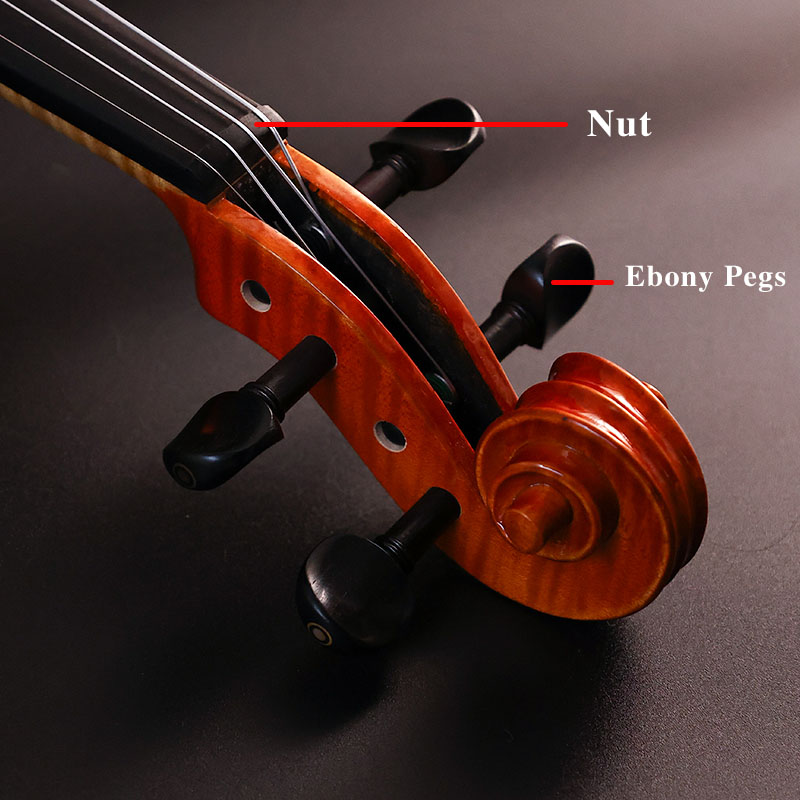
Ebony Pegs and Nut
2. Comfortable Play ability
The setup of a violin has a direct impact on how comfortable it is to play.
The height of the nut, the string height above the fingerboard, and the bridge setup can all affect how easily a beginner can press the strings.
For a standard 4/4 violin, the string height is commonly set within an appropriate range—for example, approximately 3–3.5 mm for the E string and 5–5.5 mm for the G string, depending on the instrument and setup.
If the strings are too high, pressing them may require unnecessary effort and can become uncomfortable.
If they are too low, unwanted buzzing may occur.
For beginners, proper setup is just as important as the violin itself.
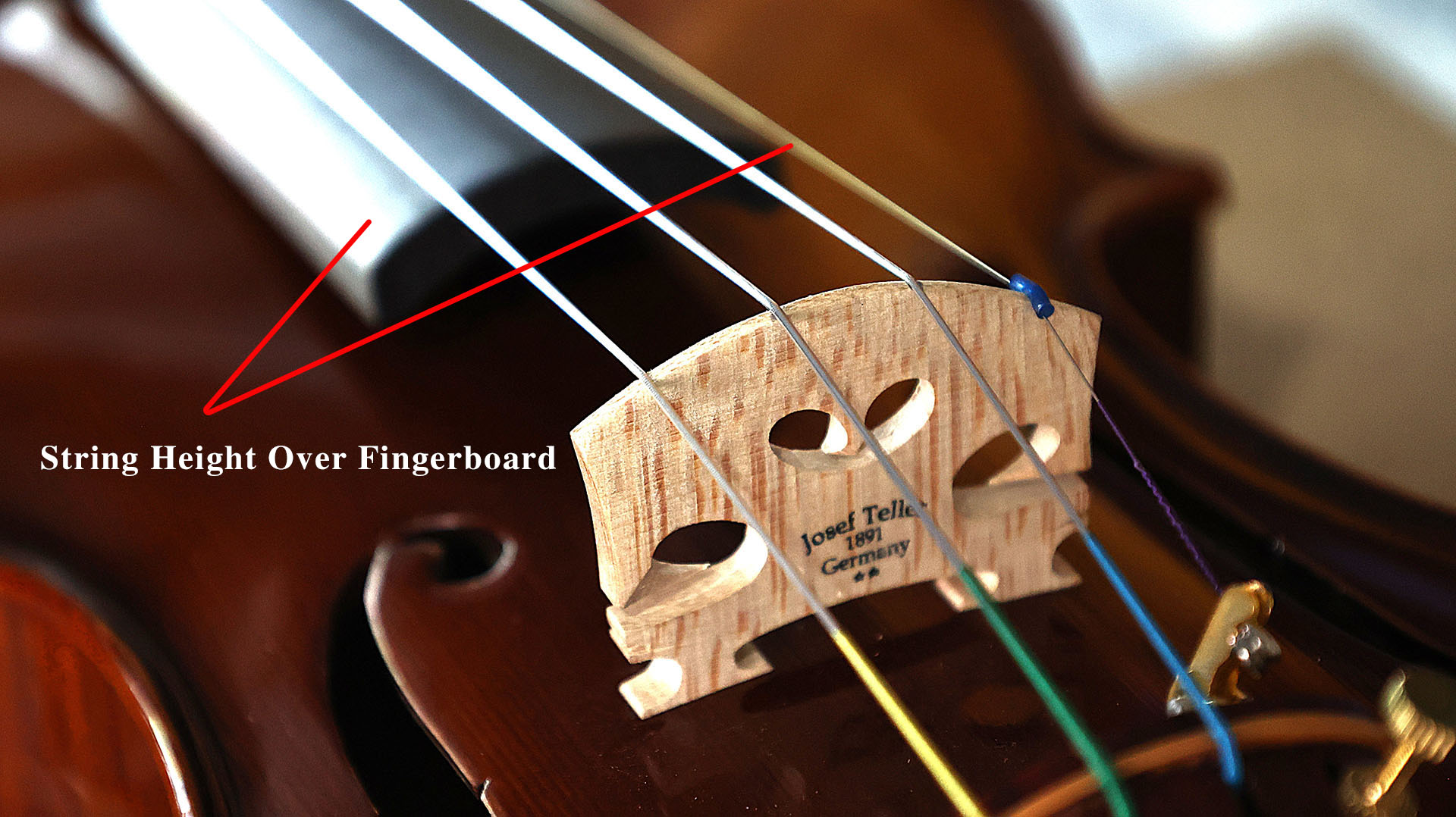
Bridge and String Setup
3. A Clear and Pleasant Tone
A beginner does not need an expensive violin with a highly complex tone.
What matters more is that the sound is clear, balanced, responsive, and free from unnecessary noise or excessive muffling.
The choice of strings can also affect the playing experience.
Franz Sandner student violins are available with nylon strings on selected models. Nylon strings can provide a softer and warmer tonal character, which can be comfortable for beginners who are still developing their bow control.
For a student who is learning to produce a stable and controlled sound, having a responsive instrument with a comfortable tone can make practice more enjoyable.
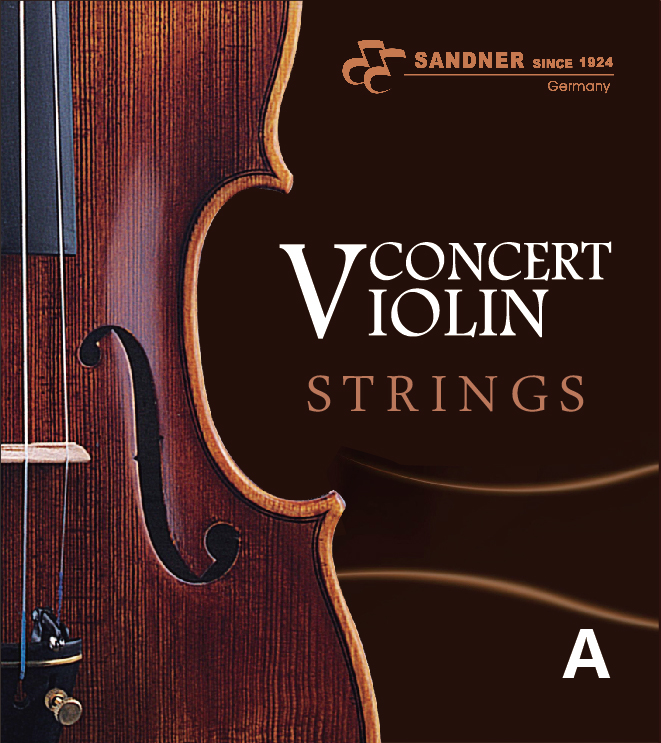
Franz Sandner Synthetic Strings
Franz Sandner Student Violin Models
Recommended models : RV-5, SV-1, SV-4P
Each model is designed with the needs of developing players in mind.
Every Franz Sandner student violin is inspected by professional technicians. The top and back plates are checked at 12 thickness points as part of our quality-control process, helping maintain consistency in construction and tonal performance.
We also pay close attention to the details that directly affect playability, including:
· Nut height and string spacing
· String height above the fingerboard
· Bridge setup
· Overall instrument adjustment
· Comfortable finger response
Selected models are equipped with a lightweight carbon-fiber tailpiece and four fine tuners, making fine adjustments easier for beginners.
The SV-1 and SV-4P are equipped with nylon strings, offering a softer and warmer tonal character that is well suited to beginner players.
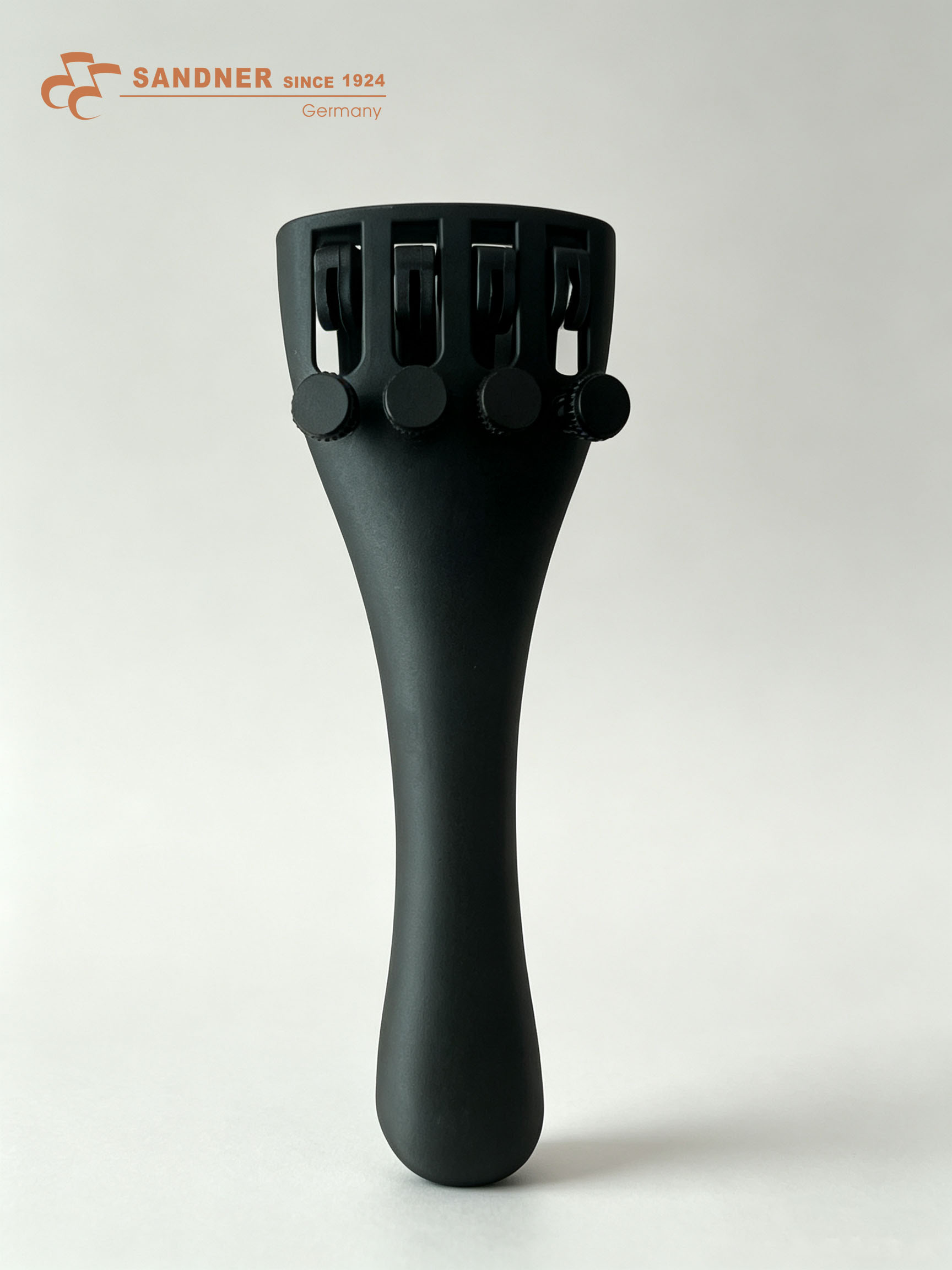 Tailpiece
Final Thought
Choosing a beginner violin is not about finding the most expensive instrument.
It is about finding an instrument that makes learning comfortable, stable, and enjoyable.
A good beginner violin should help the student focus on learning rather than struggling with the instrument.
The first violin does not need to be the best violin.
It needs to be the right violin to begin the journey.
Author: Teddy Chen
About the Author:
Teddy Chen is the General Manager of Franz Sandner Musical Instruments Co., Ltd. With over 30 years of experience in the musical instrument sales and manufacturing industry, he has visited most countries and music markets around the world.
Coming Next: Intermediate-Level Violins
In Part 2, we will introduce Intermediate-Level Violins, designed for students who have been playing for approximately 1–3 years or are ready to choose their second violin.
We will explore what changes when a student moves beyond the beginner stage—and what to look for when tone, response, and musical expression become increasingly important.
Franz Sandner, Since 1924
www.franzsandner.com
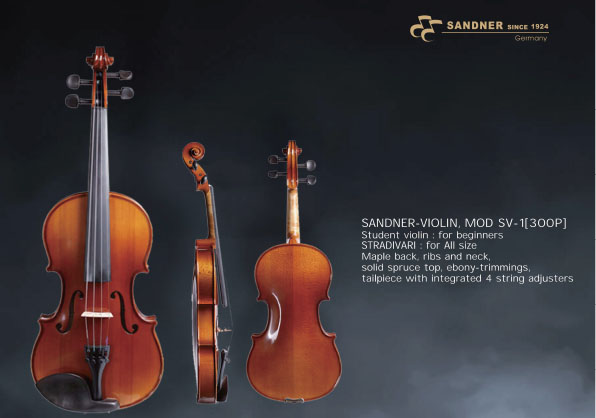
Franz Sandner SV-1 Violin